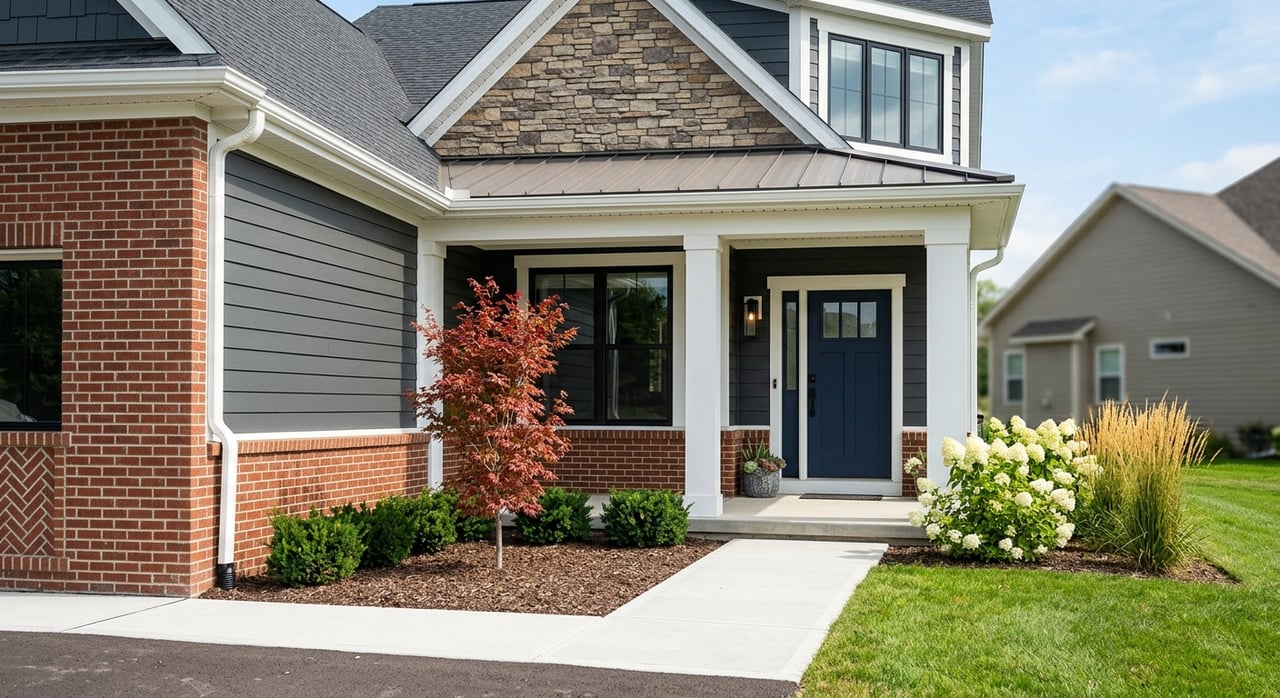
If you are shopping for a new construction home in Washington Township, the model home can make every builder look like the right choice. The challenge is figuring out what is actually included, how the lot affects the build, and which contract terms matter before you sign. This guide will help you compare builders more clearly so you can move forward with confidence. Let’s dive in.
Understand Washington Township build types
Washington Township gives you more than one path to new construction, and that matters when you start comparing builders. Some communities offer planned community or to-be-built homes, others lean toward semi-custom estate subdivisions, and some builders focus on fully custom homes.
For example, buyers may come across communities like Powell Ridge from M/I Homes, which markets final to-be-built opportunities and personalized plans. You may also see semi-custom options like MJC communities such as White Oaks or Bradbury South, where model choices, quick occupancy inventory, or customizable remaining sites can vary. On the custom side, builders like Ferro Homes advertise services such as design, site selection, permitting, budgeting, and construction management.
Why build type changes your comparison
A planned community often gives you a more structured menu of plans, finishes, and timelines. A semi-custom community may give you more flexibility on layout, elevation, and site choice. A custom build can offer the most personalization, but it usually requires closer review of the lot, permitting process, and overall budget.
That is why you should avoid comparing every builder as if they offer the same product. The right question is not just, “Which builder is cheaper?” It is, “What type of building experience and level of flexibility are you actually getting?”
Compare price by scope, not headline
One of the biggest mistakes buyers make is comparing advertised base prices without checking what is included. Builders can present attractive pricing, but photos and virtual tours may show optional features that are not part of the base package.
Michigan guidance also warns that the lowest written estimate is not always the best value if the materials or services are lower quality. A better approach is to compare each builder line by line so you can see the true cost of the home you want.
What to compare line by line
When you review pricing, ask each builder for written details on:
- Base price
- Lot premium
- Included finishes
- Upgrade allowances
- Structural options
- Appliance package
- Flooring and countertop selections
- Exterior features
- Change order pricing
If one builder looks less expensive at first glance, check whether another builder includes items that would cost extra elsewhere. That side-by-side review often gives you a more accurate picture of total value.
Compare lots as carefully as floor plans
In Washington Township, lot selection is not just about size or curb appeal. It can affect your timeline, future plans for the property, and even what improvements you can make later.
The township Building Department states that subdivision restrictions and easement agreements can override township approval. In practical terms, that means a permit alone may not give you the final say if you want to add a fence, deck, or other future improvement.
Check restrictions before you commit
Before choosing a lot, ask for clarity on:
- Recorded subdivision restrictions
- Easements on the property
- Association approval requirements, if applicable
- Setback limitations
- Utility servicing for the specific parcel
This is especially important if you are choosing between a neighborhood lot and a larger estate-style homesite. A bigger lot can offer more space, but it may also come with different utility or site-planning considerations.
Utility service can change cost and timing
Washington Township’s DPW maintains water and sewer resources and also provides well and septic information. Because service can vary by parcel, you should confirm the exact utility setup for the lot you want before comparing builders.
That step matters even more on edge-of-subdivision or larger homesites. Utility planning can influence both total cost and how quickly construction moves.
Lot size varies more than many buyers expect
Not every new construction lot in Washington Township feels the same. Research examples show one MJC quick-occupancy home in White Oaks on a 0.68-acre lot with 120-by-250 dimensions, while Bradbury South highlights nearly one-acre homesites.
That kind of variation means you should compare the lot, surroundings, and builder restrictions together. A floor plan you love may feel very different depending on the site it sits on.
Review township and zoning factors early
For semi-custom and custom builds, lot selection is also a land-use issue. Washington Township Planning & Zoning reviews preliminary development plans for setbacks, flood plain violations, height limits, parking, and site density.
If a property needs additional discussion, the township offers a monthly pre-planning advisory meeting. That makes it smart to ask early questions instead of assuming every lot will work the same way for every plan.
Ask builder-specific site questions
When you compare builders, ask:
- Has this floor plan already been reviewed for this lot?
- Are there any setback or height concerns?
- Is the lot affected by flood plain or density issues?
- Who handles township coordination and permitting?
These questions can help you avoid choosing a builder-plan-lot combination that creates delays later.
Verify builder licensing and track record
Marketing materials and online reviews can be helpful, but they should not be your only filter. In Michigan, residential builders are licensed under the Occupational Code, and work totaling $600 or more in labor and materials must be performed by a licensed builder.
The state also recommends asking for the builder’s 10-digit license number, verifying current status and disciplinary history, and checking references from prior homeowners. That gives you a much stronger picture of reputation than branding alone.
What to ask every builder
Before you move forward, request:
- The builder’s full legal business name
- 10-digit Michigan builder license number
- Proof of current license status
- References from past homeowners
- A sample contract
- A written warranty document
This step is simple, but it can help you filter out risk before you are deep into the process.
Compare warranties in writing
Warranty coverage is one of the easiest areas to overlook and one of the most important to compare. For example, M/I Homes advertises a 10-year transferable structural warranty at Powell Ridge.
That does not mean every builder offers the same protection. You should ask each builder for the written warranty terms, including the length of coverage, whether it transfers to a future owner, and what exclusions apply.
Focus on the details, not the label
A builder may say they offer a warranty, but the real value is in the written terms. Ask what is covered, what is excluded, how claims are handled, and whether coverage changes over time.
If you plan to stay long term, broad coverage may matter most. If resale flexibility matters to you, transferability can become an important comparison point.
Read the contract with a builder mindset
A new construction contract is not just a purchase agreement. It is also a roadmap for materials, timing, payment, responsibility, and how changes will be handled.
Michigan guidance says a written home-building contract should include the builder’s full name, address, phone number, and license number, along with detailed specifications, start and completion dates, permit responsibility, insurance information, written warranty terms, cleanup, payment terms, and clearly described extra-material costs.
Contract terms to check closely
As you compare builders, look carefully at:
- Detailed specifications and inclusions
- Estimated start and completion dates
- Permit responsibility
- Liability insurance and workers’ compensation
- Payment schedule tied to progress
- Change order process
- Extra-material cost language
- Cleanup responsibilities
- Warranty language
You should also read the fine print for lien language or arbitration clauses. Michigan consumer guidance advises getting all agreements in writing, avoiding blank spaces or unchecked terms, and making sure changes are dated and initialed by both parties.
Protect your deposit and financing options
Builder transactions often move quickly, especially when you are reserving a homesite or starting a to-be-built home. That is one reason deposit terms deserve special attention.
Consumer guidance recommends keeping financing and inspection contingencies if possible, asking about builder deposit return conditions, and remembering that you do not have to use the builder’s affiliated lender. Those details can affect your flexibility if the transaction changes.
Keep your leverage where you can
Before signing, ask:
- When is the deposit due?
- Under what conditions is it refundable or nonrefundable?
- Are financing contingencies allowed?
- Are inspection contingencies allowed?
- Is use of an affiliated lender optional?
- Is any cancellation or rescission window available for this contract?
Michigan guidance notes that cancellation rights exist only in limited situations, so it is smart to ask that question directly before you commit.
Keep records from day one
If a problem comes up later, your records matter. Michigan’s Residential Builders Section says it generally does not handle contractual, monetary, or warranty issues, and complaints usually must be filed within 18 months after completion, occupancy, or purchase, whichever is latest.
Because that complaint process is limited, it is important to save your paperwork from the beginning. Good records can make it much easier to understand what was promised, what changed, and what was completed.
Save this file as the build moves forward
Keep copies of:
- Contract documents
- Written estimates
- Change orders
- Permit records
- Inspection records
- Photos during construction
- Payment receipts and proof of payment
- Warranty documents
This habit does not just protect you. It also keeps communication cleaner during the build.
Why a local buyer’s agent can help
New construction buyers sometimes assume they can get the same result by walking into a model home alone. In reality, builder deals often involve quick decisions, builder-written contracts, lot-specific issues, and township rules that are easier to evaluate with local guidance.
A local buyer’s agent can help you compare builders, review lot differences, keep contract questions organized, and stay focused on the total deal instead of the sales presentation. That kind of practical support matters in a market like Washington Township, where product type, lot setup, and builder process can vary from one community to the next.
If you want help comparing new construction homes in Washington Township, Joseph Sinishtaj can help you evaluate builders, lots, and contract details with a local, responsive approach.
FAQs
How should you compare new construction builders in Washington Township?
- Start with scope, not the base price. Compare lot premiums, included finishes, upgrade allowances, warranty terms, contract language, and lot-specific factors side by side.
What lot issues matter most for Washington Township new construction homes?
- Check subdivision restrictions, easements, setback limits, utility servicing, and any association approval requirements before choosing a lot.
What should you ask a Michigan builder before signing a new construction contract?
- Ask for the builder’s full business information, 10-digit license number, written warranty, detailed specifications, permit responsibility, payment schedule, insurance details, and change order process.
Do all Washington Township builders offer the same warranty coverage?
- No. Warranty length, transferability, and exclusions can vary, so you should ask for the written warranty terms from each builder before comparing offers.
Why should you confirm utilities for a Washington Township homesite?
- Water, sewer, well, or septic servicing can vary by parcel, and that can affect both the cost and construction timeline.
Can a township permit override subdivision restrictions in Washington Township?
- No. The township states that subdivision restrictions or easement agreements can override township approval, so both need to be reviewed.